
.webp)
.svg)
%201%201.svg)
Leaf Spring vs. Air Suspension: Which Is Better for Heavy-Duty Trucks?
The right suspension depends on how you work, not just what sounds better. Break down the real differences between leaf spring and air suspension for heavy-duty trucks.
Dedicated to top-notch customer care.
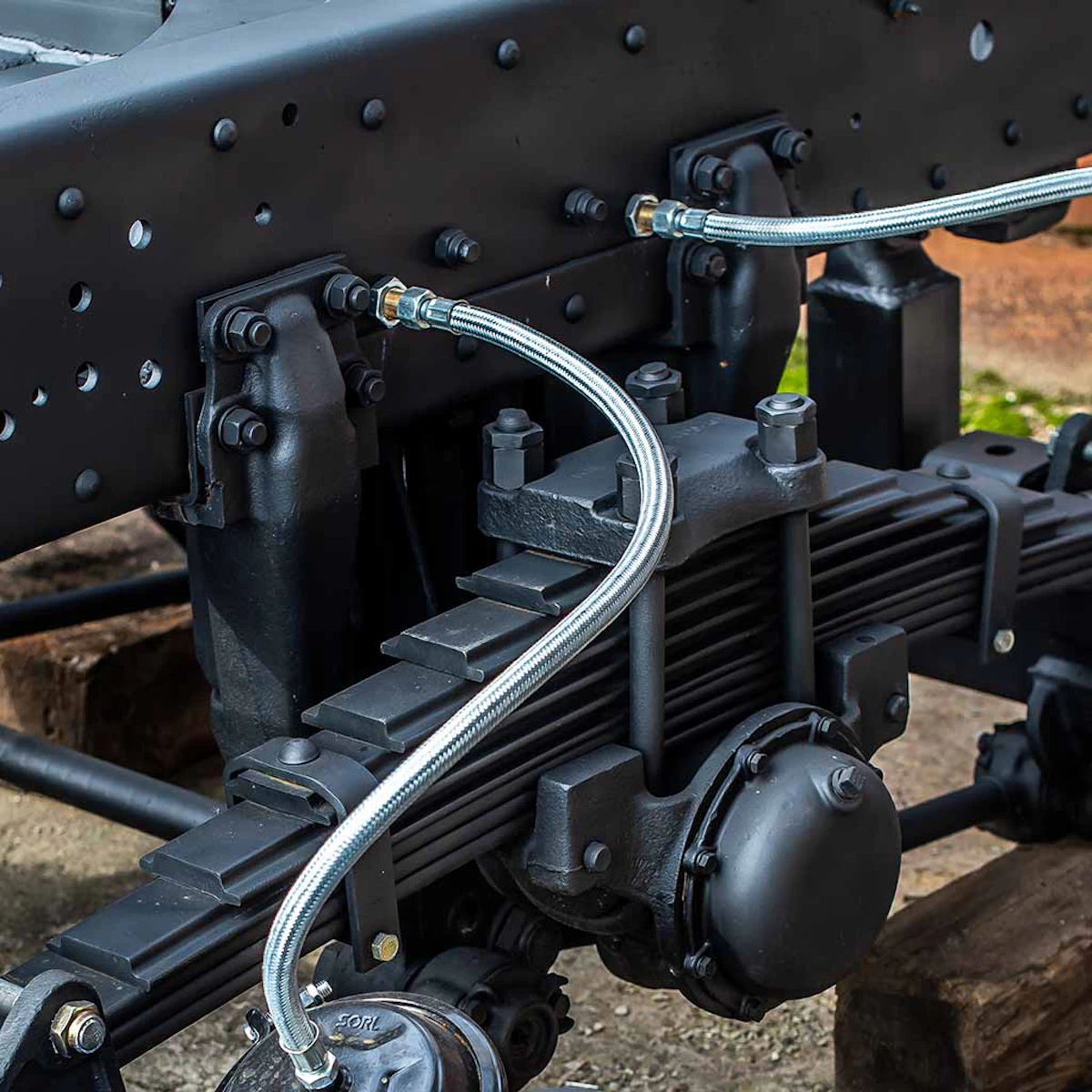

Your truck’s suspension does more than smooth out bumps. It supports your vehicle’s weight, balances cargo loads, protects driveline components, and helps keep your tires planted when the road gets rough. For heavy-duty trucks, the big comparison usually comes down to leaf spring suspension versus air suspension.
Both systems work well, but they suit different jobs. So, which one is better? Well, that depends on how you haul, where you drive, and what you expect from your truck.
How Leaf Spring Suspension Works
Leaf springs use stacked, curved steel plates mounted between the axle and frame. As your truck carries weight, those steel leaves flex to absorb load and road impact.
This setup is simple, tough, and proven. That’s why you still see leaf spring suspension on many work trucks, dump trucks, utility trucks, and older heavy-duty platforms.
The biggest advantage is durability. Fewer moving parts mean fewer failure points. If your truck runs in rough job sites, handles heavy payloads, or needs predictable support day after day, heavy-duty leaf springs can take a beating.
Pros of Leaf Springs
Leaf springs are popular because they are strong, affordable, and easy to service. They do not rely on air lines, valves, height sensors, or an air compressor.
That makes repairs more straightforward. A technician can inspect cracked leaves, worn bushings, damaged hangers, and broken U-bolts without chasing electrical or air-pressure issues.
For many fleets, that simplicity matters. Less downtime means your truck gets back to work faster.
Drawbacks of Leaf Springs
Here’s the rub. Leaf spring suspension can ride stiff when the truck is unloaded. Since the steel pack is built to support heavy weight, it may feel harsh during light-duty driving.
You may notice more vibration, more bouncing, and less comfort on rough roads. Over time, worn suspension components can also affect alignment, tire wear, and handling.
How Air Suspension Works
Air suspension uses rubber air bags instead of steel leaf packs to support the truck’s weight. The system adds or releases compressed air to adjust ride height and load support.
This gives your truck more flexibility. Running empty? The bags can use less pressure for a smoother ride. Hauling heavy? The system increases pressure to support the load.
Heavy-duty air systems often share compressed air resources with other truck systems, but they rely on their own valves, lines, bags, and controls. Air suspension offers variable support, while leaf springs are simpler, affordable, and reliable.
Pros of Air Suspension
Air ride suspension excels when comfort and cargo protection are the priority, helping reduce vibration to safeguard freight, drivers, and sensitive equipment. It maintains a more consistent ride height, making it especially valuable for long-haul trucks, delivery fleets, and vehicles carrying delicate cargo.
Key benefits:
- Reduced vibration protecting freight, drivers, and sensitive equipment
- More consistent ride height for better loading dock alignment
- Less trailer shock during transit
- Improved handling under changing loads
Drawbacks of Air Suspension
Air suspension comes with higher costs for installation, inspection, and repair, and is prone to issues like cracked airbags, leaking fittings, sticking valves, and frozen air lines caused by moisture. Even a small leak can quietly strain the compressor and cause uneven ride height — a problem that can quickly snowball if left unaddressed.
Common issues to watch for:
- Cracked or worn airbags
- Leaking fittings and connections
- Sticking or malfunctioning valves
- Frozen air lines from moisture buildup
- Compressor strain from slow, undetected leaks
- Uneven ride height from pressure loss
Payload and Towing Performance
For consistent heavy hauling, heavy-duty leaf springs offer dependable support. They work especially well when your truck carries similar loads every day.
For variable freight, air suspension has the edge. It adapts better when your payload changes from one trip to the next.
So, the better choice depends on your work. A dump truck crawling through construction sites may benefit from leaf springs. A highway tractor hauling mixed freight may benefit from air ride.
Maintenance Considerations
A strong preventive maintenance routine keeps both systems working properly.
With leaf springs, inspect for cracked leaves, shifted packs, worn bushings, loose U-bolts, and damaged hangers. Also watch for uneven ride height or tire wear.
With air suspension, check air bags, lines, fittings, leveling valves, ride height sensors, and compressor performance. Listen for leaks after shutdown. If one corner sags overnight, something needs attention.
Either way, suspension problems rarely fix themselves. Delaying repairs can damage tires, axles, driveline parts, and brake components.
Which Suspension Is Better?
Leaf spring suspension is better when you want low cost, rugged strength, and simple repairs. It fits trucks that haul heavy, work off-road, or operate in harsh conditions.
Air suspension is better when you want ride comfort, cargo protection, and adjustable load support. It fits trucks that run highway miles, haul variable loads, or need smoother handling.
So, there’s no one-size-fits-all answer. The better system is the one that matches your truck’s job.
Fix Heavy-Duty Suspension Problems Fast
Leaf springs bring strength, simplicity, and lower repair costs. Air suspension brings comfort, adjustability, and better protection for changing loads. Keep your system inspected, repair worn parts early, and your truck will ride safer and last longer.
For professional suspension inspections and heavy-duty truck repair in Cumberland, contact S&D Auto & Truck. Or for more information about truck repair, read our article on preparing trucks for DOT inspections.
%201%201.svg)

%201%201.svg)