
.webp)
.svg)
%201%201.svg)
Winterize Your Truck With Preventive Maintenance That Works in 2026
Prepare your truck for 2026 winter conditions with proven preventive maintenance: inspect batteries and charging, test coolant and heating, monitor tire tread and pressure, service brakes, and treat fuel systems to reduce downtime and prevent cold-weather failures.
Dedicated to top-notch customer care.
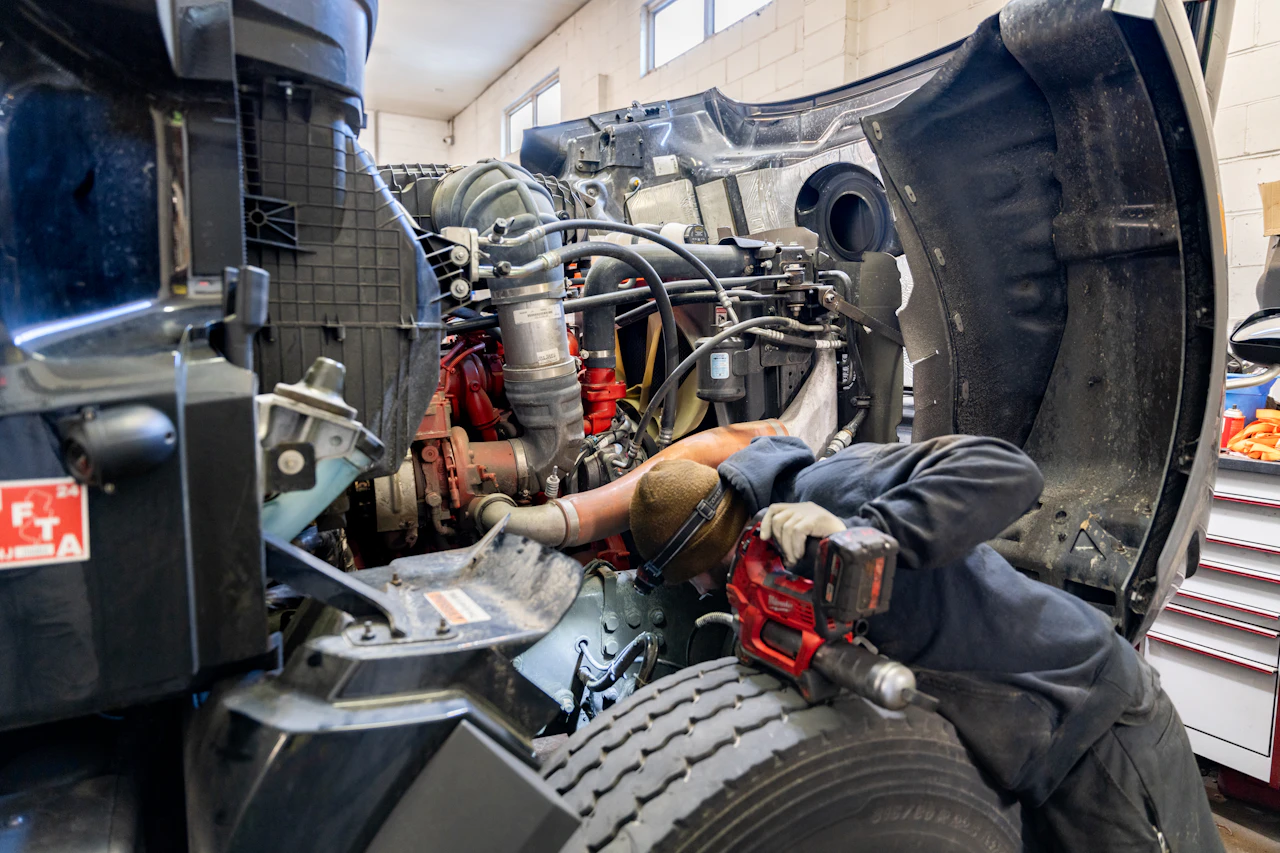

When winter hits Rhode Island, it doesn't just knock on the door. It kicks it in with freezing temps, black ice, and Nor’easters that can paralyze even the most seasoned hauler. If your diesel truck isn’t ready, you’re flirting with disaster every time you turn that key.
Let’s talk about winter preventive maintenance that actually works in 2026. No fluff. No overkill. Just practical, proven steps to keep your truck safe, warm, and running like a champ through the coldest months.
Why Winter Maintenance is a Non-Negotiable in New England
Your truck is already up against a lot: daily wear, rough roads, and long hours. Add cold weather to the mix, and you're dealing with thickened fluids, brittle rubber, drained batteries, and moisture buildup in your air brake lines. One overlooked system and boom, you're on the shoulder waiting for a tow.
Let’s break down what really needs your attention this winter.
Keep Your Coolant System in Check
Engine coolant is the first line of defense against freezing temps. And no, topping it off with tap water won’t cut it. Coolant not only prevents freezing but also regulates temperature and resists corrosion in the radiator, engine block, and water pump.
Here’s your 2026 winter checklist:
- Ensure a 50/50 mix of antifreeze and distilled water.
- Inspect your hoses for swelling or leaks.
- Test your radiator cap, yes, even that small part can cause pressure problems.
- Confirm your fan clutch is activating at low speeds when airflow is limited.
Test Your Batteries (Twice If You Have To)
Rhode Island winters can drop battery performance by 35% or more. That’s a hard no if you’re relying on glow plugs, starter motors, and ECMs to fire up your diesel on a 10-degree morning.
Be proactive:
- Load-test each battery (especially in dual setups).
- Clean and tighten all connections and corrosion
- Check your alternator and voltage regulator for proper charging.
- Inspect the starter draw. A weak motor strains the system even more.
2026 trucks may come with smart battery sensors, but don’t rely on software alone. Trust the voltmeter.
Drain Moisture from Your Air Brake System
New England’s freeze-thaw cycles are a nightmare for compressed air systems. Water sneaks into your air tanks, freezes in the lines, and you’re left with seized brake chambers when you need them most.
Here’s what to do:
- Drain your air tanks daily when temps are below freezing.
- Replace your air dryer cartridge, especially if it’s been more than a year.
- Inspect airlines and fittings for cracks, splits, or dry rot.
- Listen for air leaks around service chambers.
Don’t let a frozen brake line take you out of commission during a January whiteout on I-295.
Switch to Winter-Grade Engine Oil & Fuel Treatments
Diesel oil thickens in the cold. So do fuel lines, injectors, and filters if untreated #2 diesel starts to gel. That’s why winter maintenance in 2026 means smarter lubrication and better fuel protection.
Here’s how to stay ahead:
- Consider synthetic or lower-viscosity oil (check OEM specs).
- Add anti-gel fuel additives every fill-up.
- Replace fuel filters, clogged ones freeze faster.
- Inspect your fuel/water separator and drain it if necessary.
Modern engines have tighter tolerances. That means cold flow matters more than ever.
Tires, Tread, and Traction Tech
Whether you’re running across town or into the Berkshires, winter traction can make or break your day. Tire pressure drops roughly 1 PSI per 10°F drop in air temp, and that hits MPG, handling, and wear.
Prep your rubber:
- Check tread depth, especially on drive and steer axles.
- Keep pressures dialed in (use a calibrated gauge weekly).
- Inspect for weather cracking or dry rot.
- Rotate tires before the season to even out wear.
Also worth noting in 2026: tire pressure monitoring systems (TPMS) are smarter but still rely on sensors that can fail. Manual checks win every time.
DEF Storage and Dosing
Diesel Exhaust Fluid (DEF) freezes at 12°F. If you’re running an SCR-equipped truck, frozen DEF tanks or lines = reduced power mode. Not what you need while hauling in a storm.
What to do?
- Park in warm storage if possible.
- Don’t overfill the tank, DEF expands when frozen.
- Keep an eye on heater circuits in DEF lines and dosing valves.
Treat your emissions system with care, downtime for DEF faults is a growing issue in modern fleets.
Prevent Downtime With Smart Maintenance
Preventive maintenance isn’t just about avoiding breakdowns, it’s about controlling costs, protecting uptime, and keeping your rig reliable when conditions are anything but. Winter in Cumberland doesn’t play nice. Your truck shouldn’t just “survive” winter, it should own it.
The team at S&D Auto & Truck in Cumberland, RI has the tools, experience, and expertise to make sure your rig’s ready to roll through winter 2026 and beyond. For more information, read our article on how to keep your truck brakes from freezing
%201%201.svg)

%201%201.svg)